In the early 1980s, the world of computing was on the brink of change. Computers were large, expensive machines owned only by corporations, universities, and government labs. But one company—IBM (International Business Machines Corporation)—would soon transform that perception forever. The creation of the first IBM Personal Computer (IBM PC) not only revolutionized technology but also shaped the future of personal computing as we know it today.
In this article, we’ll dive deep into the fascinating story behind the first IBM PC, exploring its origins, development, key players, and lasting impact on the modern tech world.
The Computing Landscape Before the IBM PC
Before IBM entered the personal computing market, the industry was dominated by smaller companies such as Apple, Commodore, and Tandy (RadioShack). These companies sold affordable home computers aimed at hobbyists and small businesses.
Meanwhile, IBM was known for its massive mainframe systems—powerful computers used by large corporations and institutions. The idea that IBM would build a small, affordable computer for individuals was almost unthinkable.
However, by 1980, IBM’s leadership realized something important: personal computers were no longer toys. They were becoming serious business tools. The demand was growing fast, and IBM risked being left behind if it didn’t act quickly.
The Spark That Started It All
The turning point came when Bill Lowe, an IBM engineer, proposed an idea to the company’s management: create a small, affordable computer using off-the-shelf components.
Traditionally, IBM designed everything in-house—from hardware to software. But Lowe suggested a bold new approach: build the machine quickly by partnering with other companies.
This idea was radical for IBM, known for its cautious, bureaucratic culture. But time was of the essence. Competitors like Apple were already dominating the personal computer market with products like the Apple II.
So, in 1980, IBM approved Lowe’s plan. A small, secret team was formed to make it happen.
The Birth of the “Skunkworks” Team in Boca Raton
To move quickly, IBM formed a special project team in Boca Raton, Florida, far from the company’s traditional headquarters in New York.
This “skunkworks team” operated with unusual freedom. It consisted of about 12 engineers and designers, led by Don Estridge, a brilliant and pragmatic leader who believed in open collaboration.
Estridge’s approach broke all the traditional IBM rules. Instead of designing everything from scratch, the team decided to use widely available components. This strategy made it possible to design and produce a personal computer in just one year—a record for IBM.
Choosing the Hardware: Building the Heart of the PC
The team’s philosophy was clear: build fast, use existing technology, and keep costs low.
They chose an Intel 8088 processor, a powerful 16-bit CPU that balanced performance and affordability. For memory, the first IBM PC started with 16 KB of RAM, expandable up to 256 KB—a significant amount for that time.
For storage, users could choose between cassette tapes or 5.25-inch floppy disks, which were faster and more reliable. The system also included expansion slots, allowing users to upgrade their PCs later.
By relying on standard components, IBM ensured that parts could be sourced easily and produced in large quantities—something that would later play a major role in the PC’s widespread success.
Software and Operating System: The Microsoft Partnership
While the hardware was coming together, IBM needed an operating system (OS) to run the computer.
Initially, IBM approached Digital Research, the makers of the popular CP/M operating system. However, negotiations failed due to licensing disagreements.
That’s when IBM turned to a small software company in Seattle: Microsoft, founded by Bill Gates and Paul Allen.
Microsoft didn’t have an operating system ready, but Gates quickly made a deal to license one called 86-DOS, developed by Tim Paterson. Microsoft then adapted it for the IBM PC and renamed it PC-DOS.
This partnership became one of the most important in tech history. IBM got its operating system, and Microsoft gained the foundation to build MS-DOS, which would later dominate the PC world.
The Official Launch: August 12, 1981
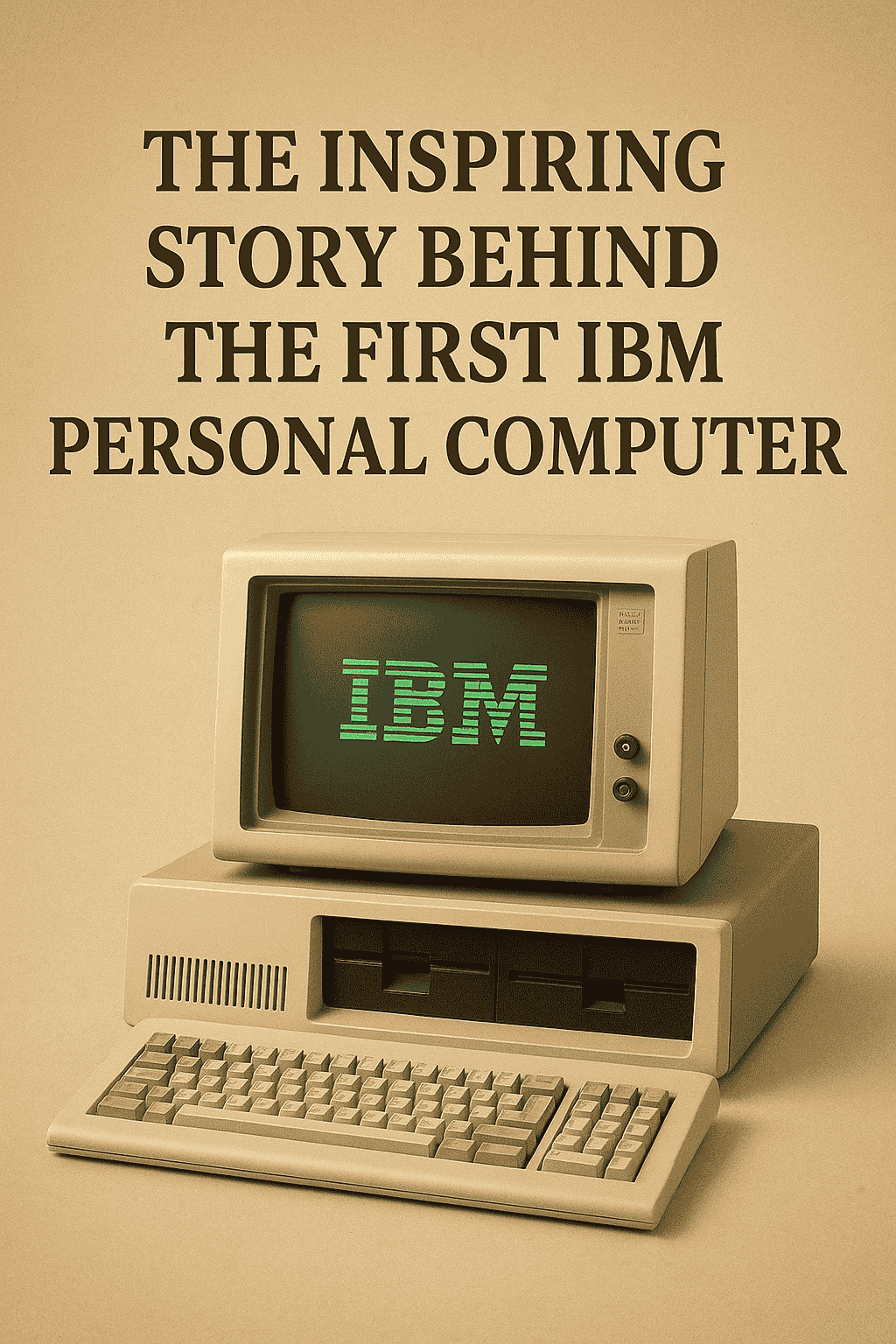
After months of hard work, the IBM Personal Computer Model 5150 was ready.
It was officially launched on August 12, 1981, at a press event in New York City. The starting price was $1,565, which included 16 KB of memory, a monochrome display, and no disk drives.
Despite its modest specs by today’s standards, the IBM PC was a huge success. Within months, it became one of the most sought-after computers in the market.
What made it even more appealing was IBM’s brand reputation. Customers who had never trusted smaller companies suddenly felt confident buying a personal computer from a name like IBM.
The Role of Open Architecture
One of the smartest decisions IBM made was to use an open architecture design.
This meant that other companies could legally produce compatible hardware and software for the IBM PC. As long as they didn’t copy IBM’s BIOS code directly, they could build “IBM-compatible” computers.
This openness led to a wave of clone PCs, built by companies like Compaq, Dell, and HP. These clones often offered similar performance at lower prices, further expanding the PC market.
In the long run, this openness helped make the IBM PC the standard for personal computing.
The Impact on the Industry
The launch of the IBM PC didn’t just change IBM—it changed the entire computing industry.
For one, it standardized personal computing. Before IBM, every manufacturer had its own system, making software compatibility a nightmare. But the IBM PC created a common platform.
Software developers now had a single standard to write for. This led to an explosion of new software, including early versions of Lotus 1-2-3, WordPerfect, and Microsoft Word.
The IBM PC also helped legitimize personal computing in the business world. Suddenly, owning a PC wasn’t just for hobbyists—it was for professionals, offices, and even schools.
How the IBM PC Changed IBM Forever
Ironically, while the IBM PC was a massive success, it also transformed IBM in unexpected ways.
By outsourcing key components like the processor (to Intel) and operating system (to Microsoft), IBM gave control of the PC’s future to other companies.
As clone makers flooded the market, IBM lost its dominance. Microsoft’s MS-DOS became the real winner, as it was licensed to all those clone manufacturers. Intel also benefited, as its processors became the industry standard.
By the late 1980s, the term “IBM-compatible” no longer meant IBM-owned. It meant a computer that could run MS-DOS and use Intel chips. The PC revolution had outgrown its creator.
The Legacy of the IBM Personal Computer
The first IBM PC is often seen as the birth of the modern computing era.
It set the stage for decades of innovation—from Windows operating systems to Intel-based processors and standardized PC designs that continue today.
The IBM PC’s influence can still be seen in every desktop and laptop computer around the world. Its open design philosophy paved the way for affordable technology, global collaboration, and a thriving software ecosystem.
Even though IBM eventually exited the personal computer market (selling its PC division to Lenovo in 2005), its impact remains deeply rooted in the digital world.
The People Behind the Machine
While the IBM PC is often remembered as a corporate achievement, it was really the work of a small, passionate team.
Leaders like Don Estridge, Bill Lowe, and Philip “Don” Estridge’s engineers were the driving force behind its success.
Tragically, Estridge died in a plane crash in 1985, but his legacy lives on. He is often called the “father of the IBM PC”, and his approach to open collaboration became a model for future innovation across the tech industry.
Lessons from the IBM PC Revolution
The story of the IBM PC teaches valuable lessons about innovation, risk-taking, and collaboration.
- Speed matters: IBM’s decision to bypass bureaucracy and move quickly was key to success.
- Partnerships can shape the future: By working with Microsoft and Intel, IBM created an entire ecosystem.
- Open design fosters growth: Allowing third-party developers and manufacturers has led to exponential industry growth.
In short, IBM’s willingness to break its own rules became the very reason it succeeded.
How the IBM PC Shaped Modern Computing
Without the IBM PC, the modern tech landscape would look very different.
Its introduction created the PC-compatible standard, which defined the architecture of computers for decades.
Operating systems like Windows, hardware from Intel and AMD, and even modern-day laptops and servers all trace their roots back to that first IBM design.
The concept of modular computing, where components like RAM, CPUs, and hard drives could be replaced or upgraded, also originated with the IBM PC’s architecture.
In many ways, every modern PC is still a descendant of the IBM Model 5150.
Fun Facts About the First IBM PC
Here are some interesting details that highlight how groundbreaking the IBM PC was:
- It had no internal hard drive; all data was stored on floppy disks.
- The keyboard alone weighed more than some modern laptops.
- The display was monochrome (green or amber text on black).
- The original manual came with technical schematics, inviting users to explore how it worked.
- Early advertisements featured the character Charlie Chaplin, symbolizing the PC’s approachability and simplicity.
These touches made the IBM PC feel both professional and personal, a rare balance that appealed to a broad audience.
Conclusion: The Computer That Started It All
The story behind the first IBM Personal Computer is one of vision, courage, and transformation.
In less than a year, a small team inside a massive corporation changed the world by creating a machine that brought computing to ordinary people.
The IBM PC didn’t just set a standard—it created an entire industry. Its open design, collaboration-driven development, and partnership with companies like Microsoft and Intel continue to shape how we build technology today. More than four decades later, the legacy of the IBM PC 5150 still lives on. It was the computer that made the digital revolution possible—and proved that even the biggest corporations can innovate when they think small.