In recent years, AI chatbots have evolved from simple support tools into intelligent systems capable of transforming how we work. Businesses across industries are rethinking their workflows as chatbots become more advanced, capable of handling tasks once reserved for humans.
In this article, we’ll explore how AI chatbots are changing workflows, improving productivity, reducing costs, and shaping the future of work.
Introduction: The Rise of Intelligent Chatbots
The digital transformation era has introduced many tools designed to make work faster and smarter. Among them, AI chatbots have stood out as game-changers.
Once used primarily for customer service, today’s chatbots powered by machine learning (ML) and natural language processing (NLP) can understand human intent, learn from interactions, and make data-driven decisions.
From marketing to IT operations, AI chatbots are becoming a key part of modern workflows, helping teams automate repetitive tasks, improve accuracy, and enhance communication.
What Exactly Are AI Chatbots?
Before diving into their impact, let’s clarify what AI chatbots are.
An AI chatbot is a software application that uses artificial intelligence to simulate human conversation. Unlike traditional chatbots that rely on fixed scripts, AI-powered versions can:
- Understand natural language instead of keywords.
- Learn from previous interactions.
- Offer context-aware responses.
- Perform complex actions such as data entry, scheduling, or analytics.
In short, these bots are not just responding they’re thinking, analyzing, and improving.
How AI Chatbots Are Transforming Workflows
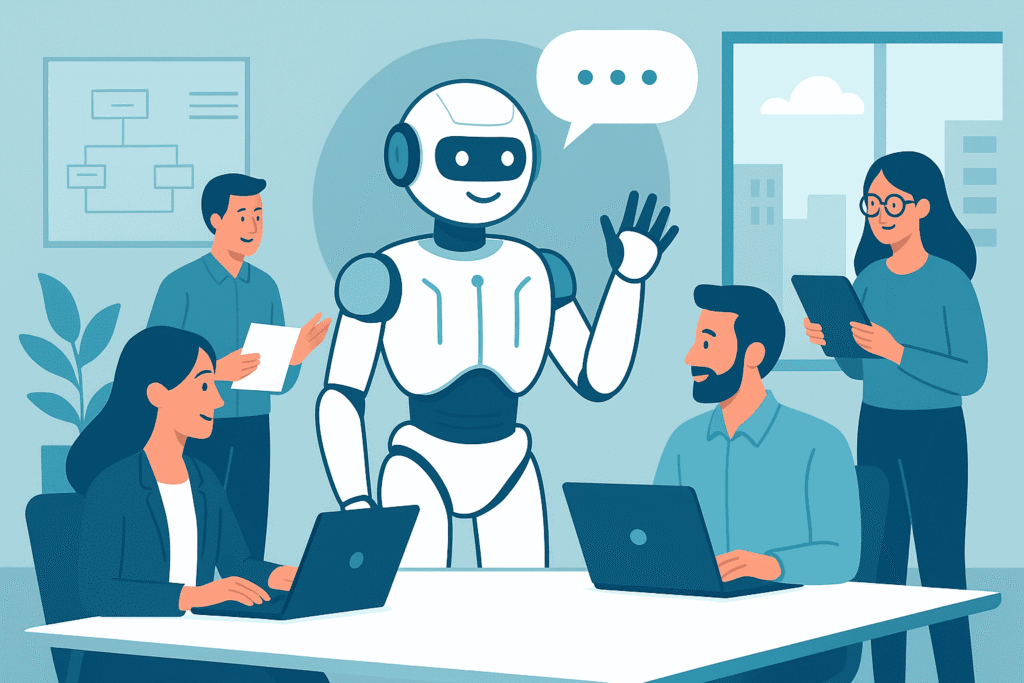
AI chatbots are influencing workflows in almost every department. Let’s break down how they are reshaping the way teams operate.
3.1. Automating Routine Tasks
One of the biggest benefits of AI chatbots is automation. They handle repetitive tasks such as:
- Answering FAQs
- Scheduling meetings
- Updating records in CRM systems
- Processing simple orders
For example, a company’s HR chatbot can instantly respond to leave balance queries or guide employees through onboarding steps. This automation reduces manual workload, allowing employees to focus on strategic and creative work.
3.2. Improving Communication and Collaboration
Internal chatbots like Slack bots or Microsoft Teams assistants streamline communication between teams.
Instead of digging through multiple documents, employees can ask a chatbot to:
- Find company policies
- Retrieve project files
- Update task progress
This quick access to information reduces response time and keeps workflows smooth and efficient.
3.3. Enhancing Customer Support
Customer service has always been a primary area for chatbot use. But modern AI chatbots take it further by providing personalized, 24/7 assistance.
They can handle thousands of customer interactions simultaneously, resolve simple queries instantly, and transfer complex issues to human agents. This leads to:
- Faster resolution times
- Improved customer satisfaction
- Reduced operational costs
For businesses, that means happier customers and more productive support teams.
AI Chatbots and Data Management
Chatbots are not just about conversations; they’re also powerful tools for data collection and analysis.
They can gather data from every interaction, customer questions, user preferences, and behavior patterns, and turn it into actionable insights.
For example, marketing teams can use chatbot data to understand what products customers are asking about most, then tailor campaigns accordingly.
This data-driven approach makes workflows smarter and decisions more accurate.
How AI Chatbots Improve Efficiency Across Departments
Let’s look at specific examples of how chatbots are reshaping workflows across various business functions.
5.1. Human Resources (HR)
HR teams spend a lot of time answering the same questions about leave policies, payroll, or benefits.
An HR chatbot can automate these queries, schedule interviews, and even collect feedback after onboarding. This saves time, reduces paperwork, and improves the employee experience.
5.2. Sales and Marketing
Sales chatbots qualify leads automatically, ask pre-screening questions, and route hot prospects directly to sales reps.
Meanwhile, marketing chatbots engage website visitors, offer product recommendations, and collect contact information all while running 24/7.
This level of automation ensures that no lead is missed and that customers receive personalized experiences from the start.
5.3. IT and Technical Support
In IT workflows, chatbots act as first-line support agents. They troubleshoot common issues, reset passwords, or guide users through basic steps before escalating the problem to human technicians.
This significantly reduces IT workload and keeps systems running smoothly.
The Role of AI Chatbots in Remote Work
Remote and hybrid work models have made efficient communication tools essential. AI chatbots are now helping distributed teams stay connected and productive.
Here’s how:
- Task reminders: Chatbots can send automatic reminders for meetings, deadlines, or follow-ups.
- Instant access: Employees can request project updates or data insights without waiting on others.
- Employee engagement: Some companies use chatbots for wellness check-ins or to collect feedback anonymously.
In remote environments, chatbots act as virtual assistants that keep teams aligned, informed, and engaged.
Real-World Examples of AI Chatbots Transforming Workflows
To understand the real impact, let’s look at how some companies are using AI chatbots effectively.
7.1. IBM’s Watson Assistant
IBM’s Watson Assistant powers chatbots for major enterprises, helping automate customer service and streamline internal processes. It uses NLP to deliver accurate answers and integrates with CRM tools to keep workflows connected.
7.2. Slack’s Workflow Builder
Slack uses AI chatbots and automation to simplify routine actions like approvals, notifications, and reminders — all within team chats.
7.3. Sephora’s Virtual Assistant
In retail, Sephora’s chatbot provides product recommendations, books appointments, and assists with online shopping, creating a smooth experience for both customers and staff.
Each of these examples shows how chatbots are not just communication tools but integral workflow components that improve efficiency and engagement.
The Advantages of Using AI Chatbots in Workflows
AI chatbots offer numerous benefits beyond simple automation. Here are the most notable ones:
8.1. 24/7 Availability
Unlike human employees, chatbots never sleep. They can handle customer queries or internal requests at any time of day.
8.2. Cost Reduction
Automating repetitive tasks reduces the need for additional staff and lowers operational expenses.
8.3. Improved Accuracy
AI chatbots minimize human errors in data entry, scheduling, and communication.
8.4. Scalability
As your business grows, chatbots can handle increased workloads without hiring extra people.
8.5. Better Employee Productivity
When employees no longer have to manage repetitive tasks, they can focus on high-impact projects that drive innovation.
Challenges of Integrating AI Chatbots
While AI chatbots offer clear advantages, integration is not always seamless. Businesses often face challenges such as:
- Data privacy and security concerns
- Integration with legacy systems
- Maintaining conversational quality
- Employee resistance to change
Overcoming these obstacles requires careful planning, clear training, and transparent communication about how chatbots support — not replace — human workers.
The Future of AI Chatbots in Workflows
The next generation of AI chatbots will be even more capable. With advancements in Generative AI and large language models (LLMs) like GPT, chatbots will:
- Understand context with near-human accuracy
- Handle multi-step, complex workflows
- Provide predictive insights using analytics
- Collaborate with other AI systems
We can expect to see AI copilots embedded in every digital workspace, from email clients to design tools, transforming how work gets done.
In the near future, AI chatbots won’t just support workflows; they’ll lead them.
How to Implement AI Chatbots Effectively
If you’re planning to integrate chatbots into your workflow, here are a few best practices:
- Start small: Begin with simple use cases like FAQs or task scheduling.
- Choose the right platform: Pick a chatbot platform that integrates easily with your existing tools (like Slack, HubSpot, or Salesforce).
- Train with real data: Feed your chatbot with relevant company data to make it context-aware.
- Monitor and improve: Continuously analyze interactions to refine performance and accuracy.
- Balance automation and human touch: Make sure users can still reach a human when needed.
Implementing chatbots thoughtfully ensures that automation enhances productivity rather than causing frustration.
Ethical and Privacy Considerations
As with any AI technology, ethical use and data protection are critical. Companies must ensure that chatbots:
- Follow data privacy laws like GDPR.
- Avoid collecting unnecessary personal information.
- Provide transparency about data usage.
- They are free from bias in their responses.
Maintaining these standards builds trust with both employees and customers.
Measuring the Impact of AI Chatbots
To understand the effectiveness of chatbots, businesses should measure key metrics such as:
- Response time reduction
- Customer satisfaction (CSAT)
- Task completion rate
- Operational cost savings
- Employee productivity improvements
Tracking these numbers helps organizations see the real ROI of chatbot implementation.
Conclusion: A Smarter Way to Work
AI chatbots are no longer futuristic tools; they are essential components of modern workflows.
By handling repetitive tasks, improving communication, and providing instant access to data, they enable teams to work smarter and faster. From HR to marketing, chatbots are transforming the way we approach productivity and efficiency.
As artificial intelligence continues to advance, the line between human and machine collaboration will become increasingly blurred. The businesses that embrace this change early will be the ones that stay ahead.
In the end, AI chatbots aren’t replacing people; they’re empowering them to do their best work.